


An 8-Day Road Trip Through Nicaragua: Volcanoes, Lakes & Pacific Ocean

When I booked my trip to Nicaragua, I didn’t really know what to expect. The country is only just starting to get some attention from travelers crossing Central America, surfers chasing the perfect break, and adventurers looking for uncrowded coves.
Tucked between the Caribbean Sea and the Pacific Ocean, with volcanoes shaping its dramatic landscape, I knew I couldn’t go wrong—and this trip proved me right. Nicaragua surprised me in every possible way.
It’s a mix of colonial towns, vast lakes, towering volcanoes, tropical forests, wild beaches, powerful waves… and maybe a turtle or two.
Here’s the story of our 8-day road trip—a blend of exploration, slow travel, raw nature, unforgettable moments, and seriously good food.

Day 1: Colonial Granada stepping back in time
Our adventure began in Granada, one of Central America’s oldest colonial cities—and easily one of its most picturesque. Think tropical colors, colonial façades, baroque churches, horse carriages under palm trees, volcano views and a lake breeze drifting through the streets. It’s the perfect starting point to understand Nicaragua before heading to nature, beaches and islands.

Founded in 1524, Granada is among the oldest European settlements in the Americas. Set on the shores of Lake Nicaragua, beneath Volcán Mombacho, the scenery already feels dramatic the moment you arrive.
Ideally, you’d stay for two nights, but even with one, you can make the most out of it.
A perfect introduction to the country begins with its iconic churches, colorful streets, a sunset boat tour, and if time allows, a hike to the volcano.
Here are a few highlights you shouldn’t miss!
Visit Parque Central de Granada and the Assumption Cathedral
If you’re doing any sightseeing in downtown Granada, Parque Central (also known as Parque Colón) really can’t be missed. This is the area that life seems to revolve around in the city and most of the restaurants, shops, and accommodations are within a few block radius from this city center. We stayed at Tribal Hotel just few blocks from the park and loved having everything walkable distance.

At the heart of Parque Central, bordered by la Plaza de la Independencia is the Catedral de Nuestra Señora de la Asunción (also known as Catedral Inmaculada Concepción de María). This is the bright yellow church you see in every iconic photo of Granada. The cathedral has a long history, getting its start as a small temple in 1210. In the centuries since, it has undergone countless renovations and was finally completed in 1972. Today, with most of Granada’s buildings standing just a couple stories tall, the cathedral towers over it all and is a main attraction for tourists. Entrance is free.
Climb the Bell tower of Iglesia La Merced & more
There are few main churches that grace Granada’s picturesque streets. Each is worth a visit — all are beautiful in their own right. But the highlight is to head to Iglesia la Merced.
Iglesia La Merced
Built in 1534 (sacked and burned, then rebuilt in 1670), this church offers the most spectacular views in the entire city.

The real highlight is climbing up to the bell tower where you’re rewarded with a 360° panorama overlooking Granada’s terracotta rooftops, the lake, and the volcano.
There is a small entrance fee, and the stairs are narrow, but it’s absolutely worth it.
Iglesia Guadalupe
Built in the 17th century, Iglesia Guadalupe is sadly in a state of disrepair.
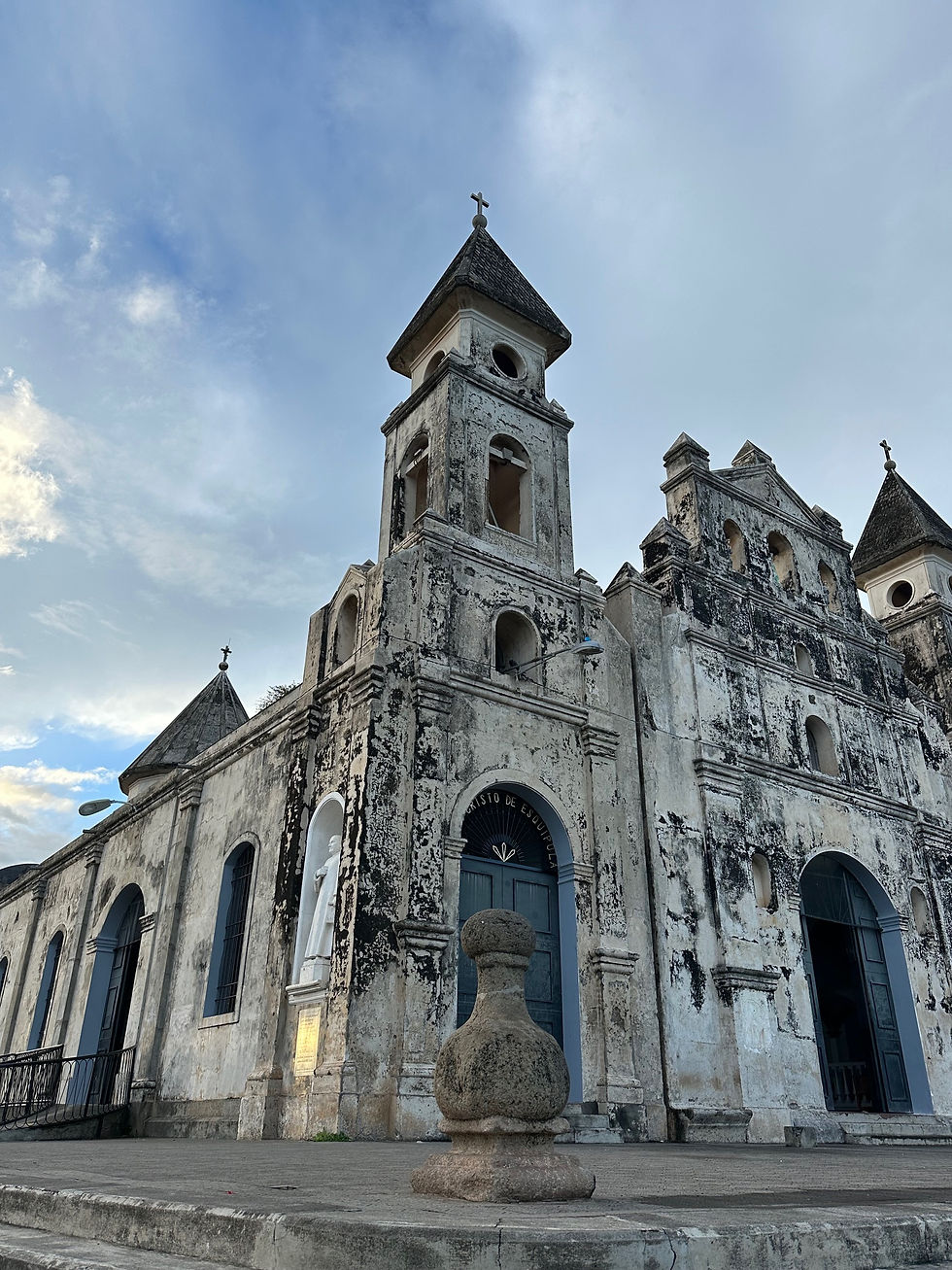
Its faded and crumbling façade hints at its turbulent past.
In 1856, it was used as a fortress by the American adventurer William Walker, who attempted to take over Nicaragua and briefly named himself president.
Convento San Francisco
The last church I visited was the Antiguo Convento San Francisco. Built by Franciscan monks in 1529, it too was burned down and had to be reconstructed. I didn’t go inside, but my guidebook mentioned that its courtyards hold beautiful artwork that is absolutely worth seeing, so might want to check it out!
Wander the colourful streets
Colorful streets, historic churches, lively plazas, café terraces—Granada feels like an open-air museum
Calle La Calzada
Just off Parque Central, Calle La Calzada. is Granada’s most famous street and the city’s social hub. By day, it’s a colorful cobbled street lined with cafés and shops, and by night it transforms into a lively pedestrian area when restaurants set tables outside.
It’s the ideal place for dinner, a drink in the warm evening air. Weekends bring musicians, families, and street performers—perfect for feeling the real pulse of Granada.
Calle Real Xalteva
Calle Real Xalteva — A more local street that still preserves colonial-era architecture and charmed back-street vibes. It’s often mentioned among the older city streets worth walking to get a quieter feel of Granada
Sunset/sunrise Boat Tour on Las Isletas
Granada sits right on Lake Nicaragua, and another way to enjoy it is by hopping on a boat and cruising through Las Isletas—a cluster of 365 tiny volcanic islands created by an eruption of Mombacho.
Once used as pirate hideouts in the 1600s, the islets are now dotted with local homes and a few vacation retreats. You can explore them by kayak, paddleboard, or simple boat tour.

We chose a 1/2 day boat trip, spotted birds, stopped by “Monkey Island,” and visited Fuerte San Pablo, an old Spanish fortress with beautiful lake views. It’s a peaceful, scenic way to experience the nature and history around Granada. I have added links to book a tour at the end of this page!
Tour Volcan Masaya
About 40 minutes from Granada lies Volcán Masaya at Parque Nacional de Volcán Masaya, one of Nicaragua’s few active volcanoes—and one of the easiest to access.
The visit includes a quick stop at the museum, followed by a short drive up to the crater.
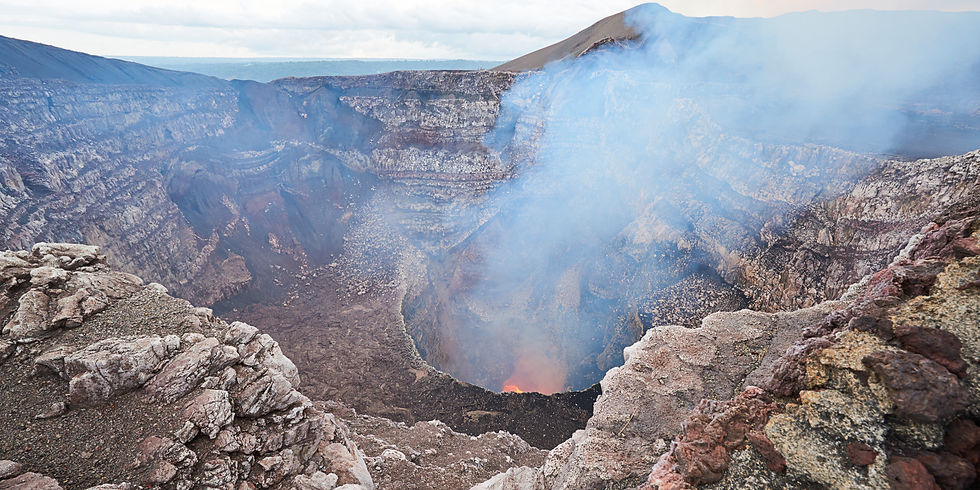
You’re allowed only about five minutes at the edge due to the toxic fumes, but even in that brief time, the scenery is breathtaking—and you might even hear the volcano roaring. Entrance costs $25 for 4 of us, and in our opinion, it’s absolutely worth the experience.
Tip: If you visit at sunset, the sulfur plume lights up the sky in fiery orange, and you may catch a glimpse of the lava glowing in the crater below.
Days 2–4: Ometepe Island, Volcanoes & Chocolate Paradise
From Granada, we continued our road trip through Nicaragua as we drove to the port of San Jorge and loaded our car onto the ferry across Lake Nicaragua to the volcanic island of Ometepe, arriving in Moyogalpa. We hadn’t booked a spot for the car in advance, but were still able to buy tickets on site for the vehicle and the four of us. As a standard practice, we had to pay an additional foreigner tax and port tax.
Tip: Make sure you arrive 2 hours in advance because there is some paper work prior to boarding and check the ferry schedule ahead of time to make sure your plans align smoothly with crossing times.

Rising straight out of Lake Nicaragua, the island is formed by two stratovolcanoes—Concepción and Maderas—connected by a ribbon of land. It’s wild, lush, peaceful and deeply rooted in nature and local culture.
Life here moves slowly: farms, jungle paths, black sand beaches, waterfalls, natural springs, howler monkeys and endless views of volcano slopes disappearing into clouds.
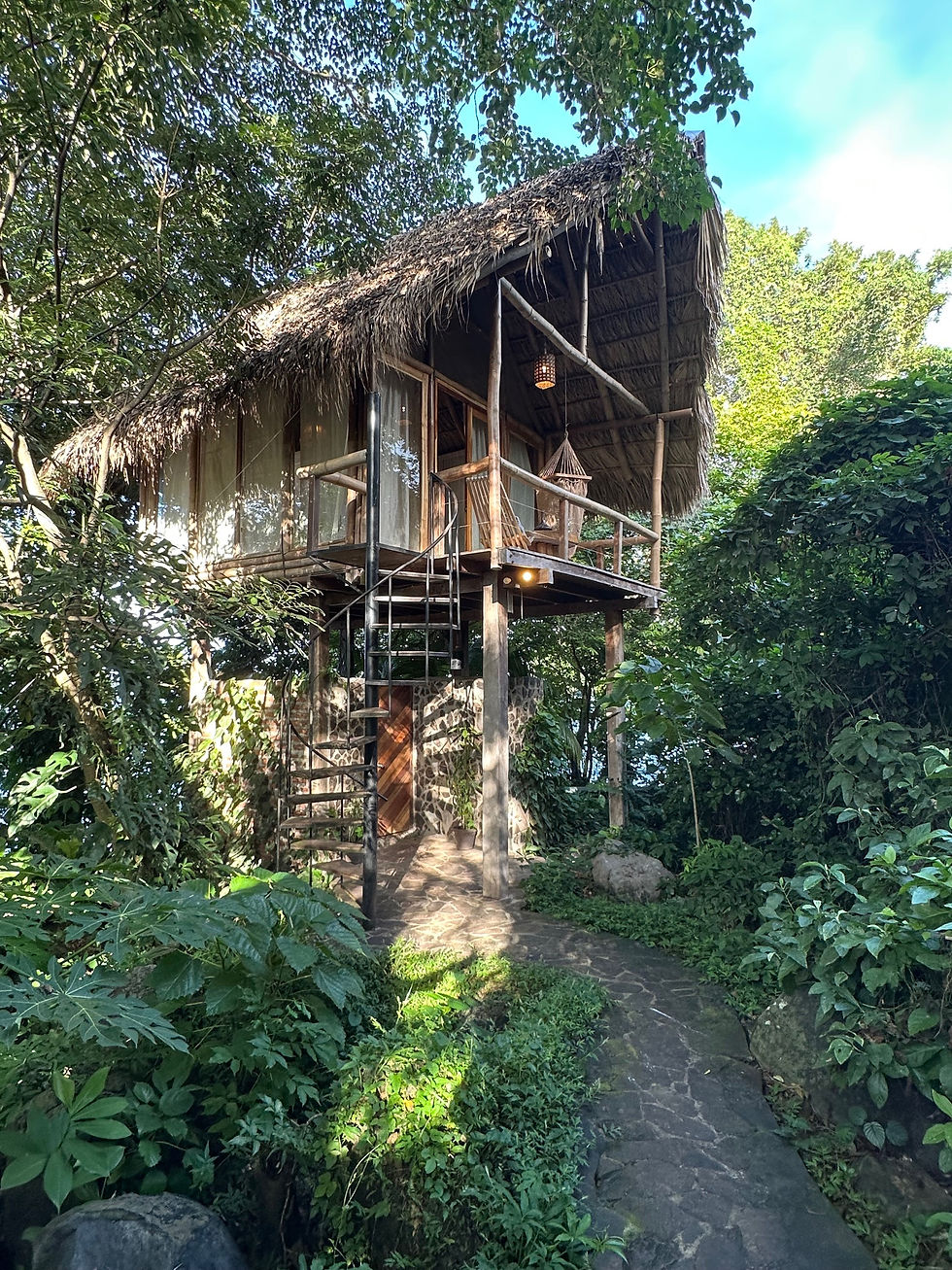
We stayed in a wonderful jungle retreat called El Pital – The Chocolate Paradise, set right on the lakeshore with charming stilt bungalows. The restaurant area features a large wooden platform overlooking the lake, perfect for lounging, reading, and simply disconnecting from the world.
El Pital mainly serves vegan food, but if you’re craving something different, the nearby Café Campestre is a great option, serving delicious meals from breakfast through dinner.
On the island those are the MUST DO:
Join the chocolate tour at El Pital Chocolate Factory
El Pital is more than just a retreat; it is also a chocolate factory that grows its own cacao trees, harvests the pods, and produces its own chocolate.
The tour takes you in an almost 3-hour immersive experince explaining cacao culture, visiting the factory and understanding the transformation process until tasting fine chocolate. It gives you a very insightfiul experience about the relation between Nicargua and the cacao production. Justin who hosts the tour is very knowledgeable and made this experience unique.
Hike to the San Ramon waterfalls
If you’re looking for a scenic nature hike on Ometepe without committing to an eight-hour volcano trek, San Ramón is the perfect choice — and the waterfall at the top is well worth the climb.
Located on the south side of Maderas Volcano, San Ramón Falls drops over 40 meters down a mossy cliff into a small natural pool where you can take a refreshing shower.

The trail begins near the Ometepe Biological Field Station in San Ramón.
Count on 4–5 hours round-trip from the main road, less if you go by quad or motorbike. Those with a suitable vehicle can drive to a higher “car park”—really just a clearing—which marks the start of the official hike.
From there, it’s an obvious dirt path through the forest, with a small entrance fee. The trail is just over 1.5 km, gaining more than 300 m of elevation, and it took us about 40 minutes to reach the waterfall.... so not too bad.
It starts gently and gets steeper near the end with a bit of scrambling, before the waterfall suddenly appears through the trees. Along the way you might spot howler monkeys, birds, and butterflies.
Tip: Best time to visit is during rainy season and the months after—during the dry season the flow can be just a small stream. You can also reach the area by bike or horseback from nearby villages like Mérida.
Swim in natural Springs at Ojo de Agua
Ojo de Agua, the “Eye of Water,” is a spring-fed oasis tucked among the trees of Tilgüe, near Playa Santo Domingo. The pools are filled with crystal-clear water from an underground river flowing from Volcano Maderas and are constantly renewed by the spring.
While the setting is naturally beautiful, the site itself feels quite developed. The swimming areas are cement-lined and structured into two pools, which takes away some of the wild, natural charm you might expect. The lower pool is long and deep enough for swimming laps when it’s quiet, but that’s becoming rare.
Today, Ojo de Agua is very popular with both tourists and local families, and it can feel crowded and noisy, especially later in the day. Facilities like the restaurant, parking area, and amenities make it comfortable, but also add to the “resort-like” atmosphere rather than a secluded nature spot.
It’s still refreshing and worth a visit, but to truly enjoy it, I strongly recommend arriving right at opening time (around 8:00 am), before the crowds arrive.
Watch the Sunset melt into the lake
Playa Mangos is one of the best places to watch the Concepción volcano and catch Ometepe’s incredible lake sunsets. It has a small beach access with a floating platform you can swim to, and you can also rent kayaks or paddleboards for a bit of extra fun.
The restaurant serves great cocktails and ceviche, and there’s a relaxed lounge area with music and occasional live gigs. It was definitely one of our favorite spots on Ometepe!
Days 4–6: San Juan del Sur, Hidden Coves & Turtles
Next stop: the Pacific Coast. As soon as we reached San Juan del Sur, the landscape changed — rugged coastline, powerful waves, and wide-open beaches.

We spent our days discovering hidden coves, relaxing in eco-lodges, and swimming in warm ocean water. If you visit during nesting season (sept/Oct), you may even catch sight of turtles, quietly making their way to the shore - a fantastic experience!
The vibe here is barefoot, surf-ready, and easygoing.
Here’s how we spent three days in the San Juan del Sur area:
Swim in hidden coves, our favorite beaches
Playa Maderas
Located about 25 minutes north of San Juan del Sur, this is a very chill beach with just a few restaurants, coffee shops, and surf schools. You can easily spend the whole day here, depending on the tide.
You can rent surfboards or book a one-hour lesson with a surf coach. It’s a great spot for beginners, thanks to its shallow waters and long stretch of sand. After surfing, relax at one of the beach restaurants with light snacks and fresh passion-fruit smoothies.
Another great activity is walking all the way to Playa Majagual along the beautiful, pristine coastline and cooling down in tidal pools at low tide.
Tip: Access isn’t the easiest—there are no road signs, and the road is currently under construction due to the new coastal highway. You’ll need to follow a dirt road, navigate around construction trucks, and rely on Waze (which is actually quite accurate!).
Playa Majagual
Playa Majagual quickly became one of our favorite beaches on the coast. It’s a pristine, hidden cove with gentle waves—perfect for swimming.
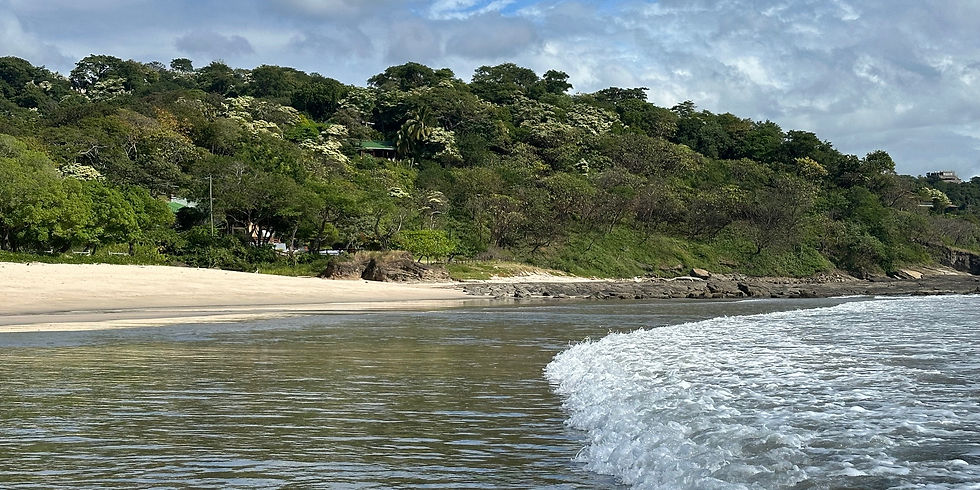
There’s also a great little beach café, Juanita’s Kitchen, serving excellent food. The chef previously worked in top restaurants and now cooks from his own seaside spot. Definitely try the ceviche and empanadas—everything is delicious.
Access is via a dirt road, but it’s fairly well signposted, so just keep an eye out on the way.
Discover Playa Ocotal & Morgan's Rock Eco Lodge
If you want to treat yourself, I can only recommend staying at Morgan’s Rock Eco-Lodge. It’s an eco-hacienda set on an amazing private property with its own beach. A small creek flows into the ocean where you can go kayaking, and the hotel literally blends into the lush vegetation—it’s one of those places where you feel surrounded by untouched nature.
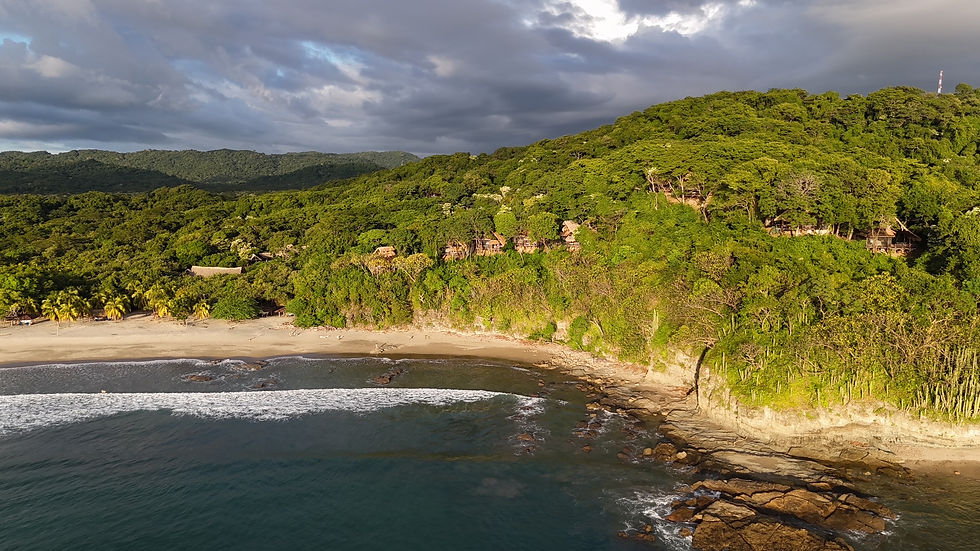
One early morning, a turtle even came to lay her eggs on the beach. The hotel carefully collects them for preservation and releases the baby turtles once they've hatch around 45-50 days later.
Morgan’s Rock is truly an experience in itself, with its own farm, ecosystem, and a sustainable farm-to-table approach focused on conservation. It was one of our favorite stays in Nicaragua.
Expore La Flor and Turtle conservation
We were already late in the season when we traveled to Nicaragua, but one unique phenomenon happens every year south of San Juan del Sur around September and October, known as the Arribadas.
During this time, thousands of Olive Ridley sea turtles come ashore at La Flor Beach to lay their eggs—sometimes 500 to 1,000 turtles in a single night. About 50 days later, massive groups of hatchlings emerge and make their way to the ocean. Both events can be witnessed at La Flor Beach, though the exact timing is impossible to predict—nature’s best-kept secret.
We were too late to experience the Arribadas ourselves, but it was still worth mentioning in case you’re traveling in September or October. We were lucky enough to spot turtles swimming in the sea while fishing near Popoyo!
Days 6–8: Popoyo — Surf, Fish & Relax
For our final days, we drove North along the coast to Popoyo, one of Nicaragua’s most famous surf regions. Even if you’re not a surfer, the energy here is contagious — relaxed mornings, salty hair, long beach walks, and endless sunsets.
Here's a breakdown of our favourites things to do:
Surf at Playa Jiquelite
We stayed near Playa Jiquelite at Monoloko Lodge, a cozy wooden bungalow run by a French family. It’s just a five-minute walk to the beach, which is renowned for its surf—mainly suited to experienced surfers, as the waves can be powerful. If you’re keen to try it, it’s best to go with a coach and always stay mindful of the strong currents.
That said, the entire coastline of Popoyo offers excellent surf spots for all levels.
Horse ride on Guasacate Beach
Guasacate is a long, stunning stretch of sand lined with hostels, beach bars, and premium accommodations. It’s one of my favorite beaches—vibrant, lively, and perfect for a sunset stroll along its several-kilometer coastline.
You can also enjoy an hour of horse riding, unwind at sunset bars like Popoyo Republic or Casitas Pacific, or savor delicious meals at Atarraya. In the evenings, local hotels often light bonfires on the beach, creating a magical, relaxed atmosphere.
Dine at Playa Santana
Playa Santana is another beach worth mentioning. While it’s a bit rocky in my opinion and not always ideal for swimming, you can stroll to the nearby Beginner Bay at the base of Magnificent Rock for breathtaking views. For dining or a premium stay, 99surf Lodge is a fantastic option—the atmosphere in the evening is elegant, relaxed, and effortlessly chill.
Go fishing at El Astillero
If you’re looking for a truly local adventure, drive to El Astillero, about 20 minutes from Guasacate. It’s a small, very local fishing village dotted with colorful boats — it really doesn’t get more authentic than this.
We headed out to sea with a local fisherman for a 3–4 hour fishing trip, had an amazing catch, and then brought it back to a local restaurant where it was cooked for lunch. We even got lucky and spotted a huge sea turtle swimming right by us — a great outdoor activity !

On our last day, we drove back to Managua to catch our flight. It’s about a 2.5-hour drive from the Popoyo area and an easy one overall. Just make sure to respect the speed limits along the way.
If you’re craving a good meal before heading to the airport, make a final stop at Mi Ranchito, near Masaya Volcano, just before entering Managua’s city limits.
Final Thoughts
A road trip through Nicaragua has never been easier — and it completely blew us away! From active volcanoes to black-sand beaches, chocolate workshops to world-class surf breaks, every day brought something new and memorable. We’ve only explored a small part of the country, and yet we’re already dreaming of returning to discover even more. Throughout our trip, we always felt safe, and with tourism still relatively low, the experience feels genuine and unspoiled.
If you’re looking for a destination that’s authentic and untamed—where nature takes center stage—Nicaragua might just capture your heart the way it captured ours.
Hope you enjoyed reading this page.
Cheers !
Plan Your Trip & Useful Links
Car rental:
Alamo car rental has been an excellent choice and has provided porfessional service with friendly staff. The car was in excellent condition. I can only 100% recommend. www.alamo.com or www.expedia.com
Restaurants:
Masaya Area: Mi Ranchito
Granada: NM Culinary fine dining, The Garden Cafe lovely place for brunch
Ometepe island:
- Cafe Campestre: International cuisine
- Playa Mangos: Best sunset bar and volcano views
San Juan del Sur:
- Morgan's rock hotel: fine dining in private estate
- Juanita's Kitchen : small restaurant on Majagual beacj serving excellent ceviche
Popoyo:
- 99 surf lodge: International & Asian fusion cuisine
- Atarraya: Seafood cuisine, very low key, located in a hostel, excellent food
Hotels:
Granada: Tribal hotel is a boutique hotel located in the city centre with exquisite ethnic taste
Ometepe: El Pital is a hippie-chic lakeside retreat that also hosts a small chocolate factory, offering an unforgettable chocolate tour experience.
San juan del Sur: Morgan’s Rock is a one-of-a-kind, privately owned eco-hacienda with its own private beach, nestled in lush, carefully preserved surroundings.
Popoyo:
- Monoloko lodge is a charming bungalow-style accommodation, only a 5-minute walk from the beach.
- Mahalo: we havent stayed there but i visited the rooms and the place is charming. I would definitely pick this place for my next stay in Popoyo.
- Casitas Pacific: Small hotel conveniently located right on the beach.
Tour guides:
Las isletas in Granada:
https://dannystournicaragua.com/trip/isletas-boat-tour/
https://www.welcometonicaragua.net/nicaragua-one-day-tours/granada-islets-tour/

Comments